


From Pixels to Plants: Rethinking Nature Through Games

Atualizado: 15 de ago. de 2025
How about we start planting more environmental awareness games? Learn about Ecopsychology and how it applies to games!
In an age where both climate crises and digital escapism are part of our daily lives, some researchers are turning to an unexpected space to spark change: video games.
Could games help us reconnect with nature and even deepen our empathy toward the environment? As some of you may know, I am an avid fan of games with sustainable and ecological themes and have recently started studying this subject!

But to further explore this question, I spoke with the wonderful Kasey Edgerton, a Doctorate PhD candidate whose work bridges ecopsychology, empathy and game studies. Kasey has a youtube channel (Ecopsych Exp) and an Instagram account where she shares her knowledge!
In this interview, she shares her insights on how ecological narratives, nature-inspired mechanics, and emotional design in games can foster a more sustainable and empathetic mindset.
Whether you’re a game designer, a journalist, or a curious player, this conversation invites us to rethink what games can do not just as entertainment, but as emotional and ecological experiences.
INTERVIEW
Livia: Hi, Kasey! Thank you very much for taking some of your precious time to chat a little and grace us with your knowledge. Firstly, could you briefly introduce yourself and tell us how you became interested in ecopsychology and its connection to digital games?
Kasey: Hi Liv! Well first of all, thank you so very much for having me! You’re too kind! Sure, I’d love to. I’m currently a doctoral candidate at Viridis Graduate Institute, in the Ecological Psychology & Environmental Studies program. I’m also in the process of finishing up a second master’s degree in museum studies at Harvard University, where I am exploring how museums can promote inter-species empathy through utilizing video games. My doctoral research focus is on how video games/virtual worlds can promote ecological empathy and combat apathy and doomism.
Long-story-short, the connection to digital games came first. I grew up as an avid gamer; beginning with Pokemon Gold on the Gameboy Color, and a beloved Pokemon companion Maganium. After hours and hours spent in this virtual world with these virtual critters, unfortunately a cousin accidently overrode my safe file… Little kid me was devastated. That was my first real experience with just how profound a connection with a game and its world could be, and it obviously stuck with me. Haha

So, I continued growing up and playing tons of different games across all sorts of genres, (some of my favorite being survival horror, JRPGS, simulation…), and this core part of my life and experiences really started popping out and showing itself during my time spent in the visual studies MFA program I attended. I started getting into virtual photography and exploring video games as fertile subject matter for other art projects. I always found myself gravitating to psychological and environmental themes/issues/ideas, but at the time I didn’t yet have a word for it. I was really working and passionate about this realm that come-to-find-out, was ecological psychology, or “ecopsychology” for short.

Livia: For those who are unfamiliar, how would you define ecopsychology in simple terms, and why do you think it matters today, especially in the context of doomism, climate anxiety and digital life?
Kasey: Of course. So, breaking down the word ecopsycholgy into its two parts “ecological psychology”, recognizes that humans are ecological beings, as in, we are a part of nature, not somehow magically removed or apart from it. As part of nature, we are subject to the same planetary processes, in a very literal sense. Just like the rest of the Earth we go through times of decay and times of renewal, we are shaped by the diversity in the environments around us, and we are in constant relationship with others, be they human, animal, fungi, etc. And we all carry narratives and behaviors shaped by all of this. In ecopsychology we dig down into these narratives and how they show up in our lives and in the larger world, and we try to “compost” ones that might be causing harm or limitation, so that more fruitful ones can emerge. 😊
The challenges faced today such as climate disruptions, ecocide, genocide, and of course many others, are deeply rooted in human narratives and behaviors. I hope that ecopsychology can help us change the narratives underpinning destructive behavior and practices that are harming all lifeforms on the planet. We are all in this together. We live and die together.
Livia: How can games, which are often played in artificial or virtual environments, help foster a deeper connection to nature or ecological awareness in players?
Kasey: I firmly believe that how players experience and interact with virtual environments influences their empathic connection to “real-world” nature. These digital worlds are psychologically and ecologically meaningful spaces that can and do evoke emotional embodied experiences, and these experiences can inspire more conscious care for how we relate to nature, as part of nature. Video games allow for the experiences of awe and empathetic awakening and strengthening, and I believe that this then allows for narrative and behavior change carried out into the broader world, combating a modern prevalence of environmental apathy and/or overwhelming doomism.
Livia: Are there any specific game titles that you believe successfully incorporate ecopsychological principles? What makes them stand out?
Kasey: What’s beautiful and fascinating to me, is that so many games actually incorporate ecopsychological principles, even if they don’t know it, or have never even heard the term before. Because, like I said earlier, ecopsych principles are principles of nature. There are five core principles or processes of ecopsychology:
1-Energy: The Principle of Energy Exchange states that all life and systems depend on the constant transfer/exchange of energy to sustain processes and relationships.
2-Diversity: The Principle of Diversity emphasizes that variety and multiplicity are essential for resilience and flourishing in both ecological and psychological systems.
3-Decay & Renewal: The Principle of Decay and Renewal highlights that nothing goes to waste in nature; processes of decomposition lead to regeneration.
4-Change: The Principle of Change asserts that transformation is constant and inevitable in both ecological and psychological contexts.
5-Relationship: The Principle of relationship means understanding that everything is linked and that we shape each other through our intra-actions.
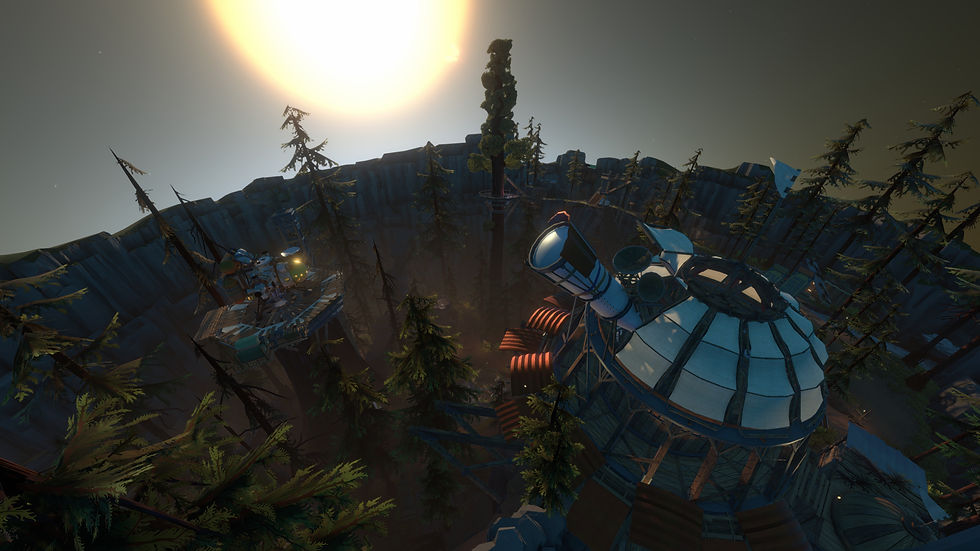
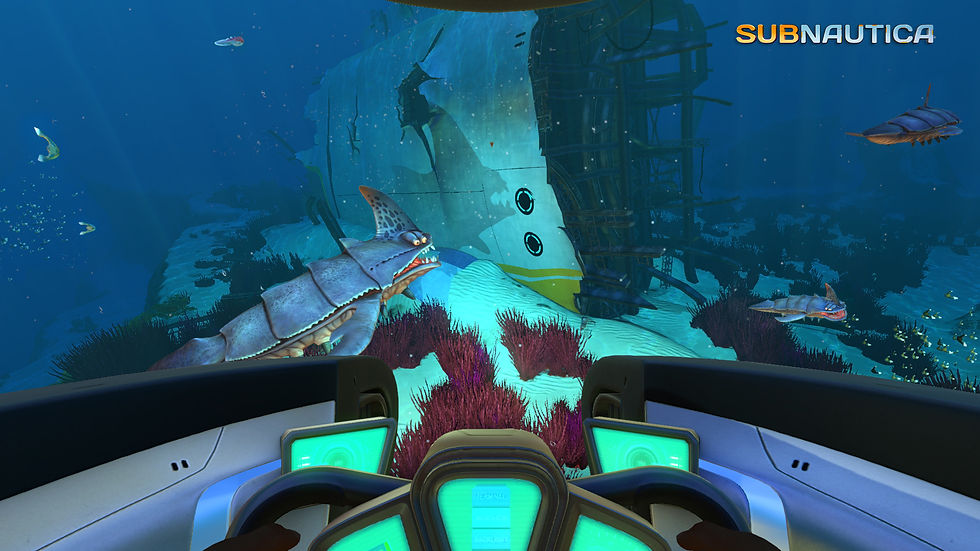
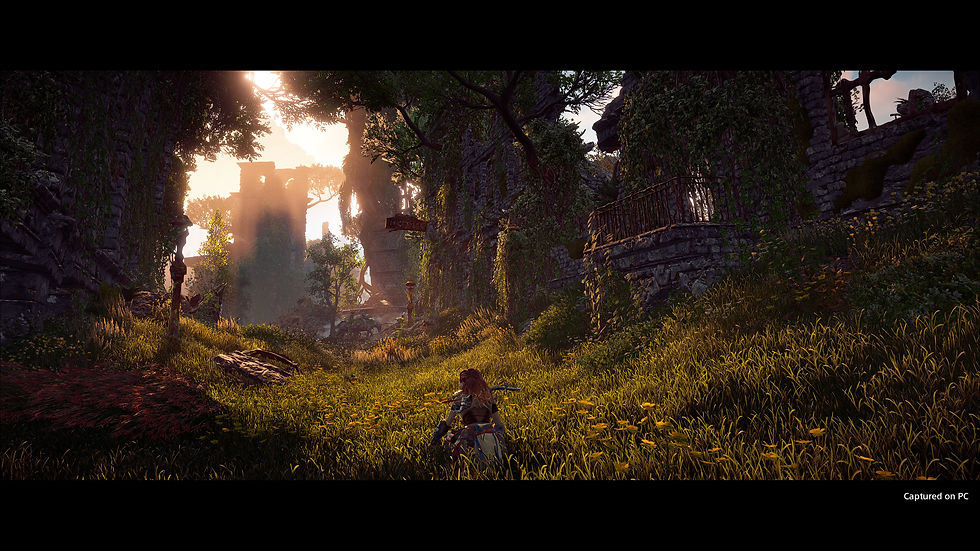
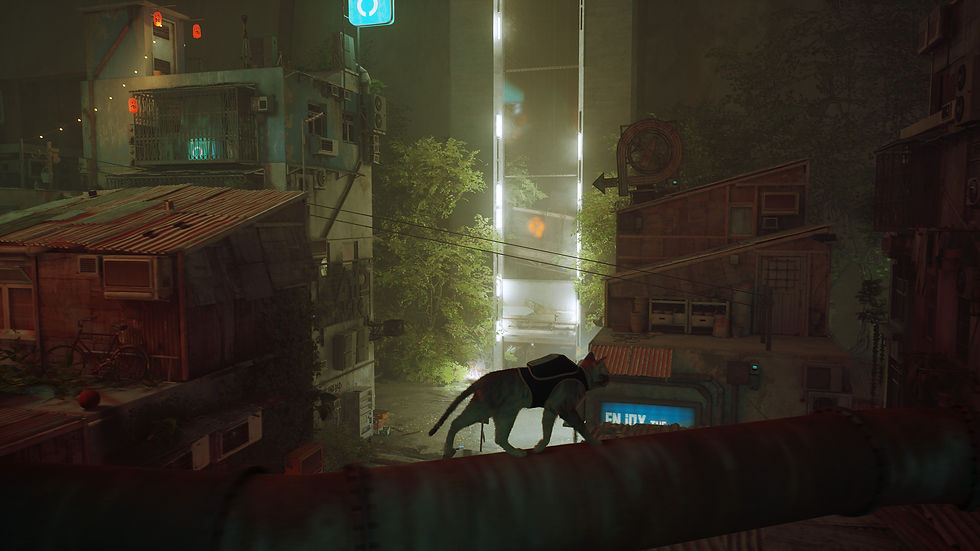
These principles can pop up across genres and scale, in innumerable ways! And I think that’s awesome! That being said. Some that pop into my mind at this very moment that particularly stand out, would be: Horizon Zero Dawn, Final Fantasy VII, Outer Wilds, Subnautica, Okami, Spiritfarer, Stray, Walden, a game, and so many others!
Livia: In your view, what is the psychological impact of interacting with nature-based or eco-themed mechanics in games? Could this influence real-world behavior or empathy toward the environment?
Kasey: In a time of growing environmental apathy and doomism, this place where video games and ecological psychology merge offers an unexpected and fertile site of potential. If players can feel connected to a digital forest, a melting ice cap, or an endangered species in a game, that emotional connection can translate into greater care, curiosity, and motivation in the physical world.
I believe that video games have the unique capacity to alleviate feelings of helplessness, disconnection, and ecological doom by offering interactive emotionally rich experiences of nature and humanity’s intra-connection with other species. Ecological doomism and apathy are paralyzing forces. Games, when thoughtfully designed, can offer action-affirming experiences where players see their behaviors matter, even in small ways. This restores a sense of possibility, re-engaging players emotionally and psychologically with the ecological world.
These are not passive experiences - they are sensorimotor, emotional, and transformative. This challenges the notion that digital media inherently disconnects us from nature. Instead, I position video games as valid ecological spaces, places of relationship, intra-activity, and embodied connection that align with ecological psychology’s principles.
Livia: Do you think there’s a difference in how players emotionally engage with ecological content in indie games versus AAA titles?
Kasey: I believe that while many AAA games are of course made with a tremendous amount of care and genuine heart, Indie games occupy a position of radical possibility. I have been so fortunate to connect and form friendships with numerous Indie developers, many of which are solo developers, and I can’t stress enough how much thoughtfulness and personal energy goes into the worlds, characters, and overall experiences they are crafting.
This can be grueling and often unacknowledged work, but the people behind these games are driven to express what’s meaningful to them and ultimately connect and affect others out in the world through what they create. This is an energy exchange. This is relationship. And I think that players can really feel that.
Livia: How do you see the role of game designers and narrative writers in promoting ecological consciousness through gameplay and storytelling?
Kasey: When I talk to designers and writers, play through incredibly thoughtful games, and even just hang out in player communities, I see how much has already shifted. There's a growing focus on care, on relationship, on the complexity of ecosystems, both digital and real. My goal is that by documenting and sharing these changes, I can help others (especially those outside of gaming) see what's possible when we let go of old narratives and stay open to continuous transformation.
The gaming world itself is going through this kind of change. There’s more care in the stories being told, more depth in how players relate to the environments around them. Developers are crafting spaces where empathy isn’t just part of the narrative, it’s part of how the designed world behaves. And in talking with them, in playing these games, in documenting it all, I’ve come to see this shift as something that’s not only real, but worth sharing.
Looking forward, I can’t help but imagine what the gaming industry might look like if it leaned even further into this momentum of change. What if ecological consciousness wasn’t just a narrative theme, but a principle embedded into how all games were developed, marketed, and distributed? We could see studios designing games that model relational thinking not only in storylines, but in how teams are treated, how resources are sourced, and how hardware waste is addressed. What if gaming culture itself became more gentle, more curious, more rooted in relationship, less about conquest, and more about reciprocity?
Livia: What are some common misconceptions about ecopsychology or environmental empathy that you’ve encountered in the games space?
Kasey: Honestly, I have to really give credit to the gaming community here. I haven’t really stumbled across many misconceptions directly. I do sometimes run into people well-meaningly talking about how we need to “reconnect” with nature, or how we are “disconnected” from nature. In terms of ecopsychology, humans can’t be disconnected from nature, because we are nature. Once we start shifting and looking at things that way, I actually think it starts to take off some of that heavy weight many of us place on our shoulders. The weight of humans “being the problem.”
That’s a narrative that comes with a whole lot of shame, and guilt, and even anger, as people feel demonized or scolded, and then all that does is shut people down. You can’t preach or scold anyone into thinking or behavioral change. It just won’t work. They tune out. Besides, this narrative that humans are this one special creature on the planet that is such a problem and so “bad” for everything else, is really just putting humans in this little box that positions them as the super-special “exception.” That they are exceptional to all other lifeforms, just in a negative way, which is still just making everything very human-centered. Let’s un-center us. We are no more special/exceptional than any other species. So, let’s all work together for the good of each other.
Livia: Could you share a bit about your current research? Are there any surprising findings or ideas that you think game developers might find useful?
Kasey: Sure! Everything is still very much ongoing, but I can definitely explain the gist of it.
Research Questions:
1.) How can video games promote inter-species empathy?
2.) How do video games advance empathetic connection beyond narrative structure, which is commonly focused on?
3.) How can video game developers consciously design for increased ecological empathy and decreased feelings of apathy and doomism?
4.) In what ways can new media art serve as bridges of ecological connection between the digital and the analog worlds?
The primary goal of the creation and execution of my doctoral project is to demonstrate how visually rich and immersive virtual ecosystems in video games can be used to inspire empathy for the IRL “In Real Life”, natural world and encourage increased ecological consciousness. By applying The Five Principles through artistic methods, my capstone will position video games as an essential medium for ecological engagement, demonstrating how digital landscapes can shape our relationship with the natural world.
Let’s see… So far, I would have to say that the biggest insight I could pass along to developers is that there is genuine interest in more ecological/ecopsychological games! As I interview players across genres and from AAA to Indie, I have received so much positive and curious feedback. People want to know more about which studios are promoting ecological themes, and beyond that, which are taking those themes and doing really interesting and innovative stuff with it! They want new and out-there stories and mechanics! And I’m seeing this echoed across cultures, genders, age groups, etc.
Livia: Lastly, what advice would you give to indie devs or storytellers who want to design games that support ecological empathy or emotional connection to nature?
Kasey: I would say, create from your own experience as a human. What has personally moved you before, because if you can tap into that, then you’ll be able to really touch others. I don’t think that games need to be more general and universal; I think they need to go more deeply personal. You reach the universal through the personal. People want to see your own unique brand of weirdness. That’s what’s so compelling about a game like Death Stranding. Grab onto the idiosyncrasies, the specifics of a place or a psychological state, an emotion, or a relationship.
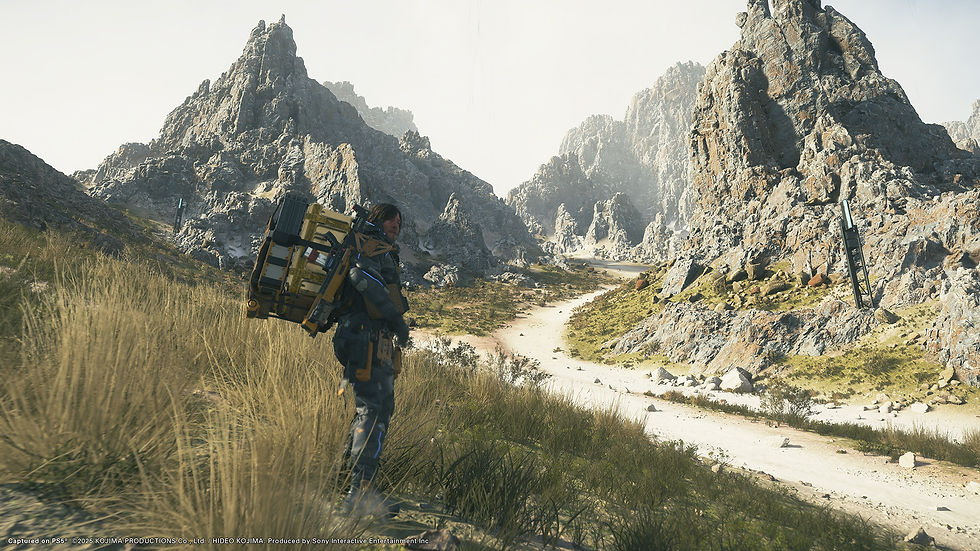
Then build a world and a story from there. Think about a forest that you loved camping in as a child, or how it used to feel playing outside in a field, and then keep those feelings and experiences in mind when you literally design a forest, field, etc. in a game. If it’s created from a place of thoughtfulness and empathy, then that will definitely come across to a player. Think of ecological processes like decay and renewal, energy exchange, change, etc. and how those are mirrored psychologically.
A protagonist might need to traverse a withering dying forest, and what might that feel like for them, and how can you really express that in game mechanics as well as story? And for real, any developers are more than welcome to reach out to me! This is my life’s passion, and I’ve kinda accidently stumbled into positioning myself as the only “Video Game Ecopsychologist”….so far! 😊
I would just like to thank Liv from the bottom of my heart for inviting me into her virtual space to gush about ecopsychology, video games, and how I see them as a force for so much good! And, if you’ve made it this far, thank you as well!
Before you go!
Did you enjoy the interview?! I personally LOVED reading every single word, so full of passion. Kasey is a huge inspiration to me, and to be honest, I see her as a kind of ecopsychology superhero. Real-life heroes.
Be sure to follow her on social media and watch her YouTube videos!
KASEY, COME TO BRAZIL!
I hope to return with more content about ecopsychology and wildlife conservation! It's a topic that also moves me deeply.
See you soon, love!


Comentários